The 2025-26 academic year closed out with a vibrant spring semester. Student clinicians served individuals and organizations across our in-house clinics, working with faculty to protect rights, educate the community, support initiatives, and advance environmental causes.
South Royalton Legal Clinic
Thirty-five students provided civil legal services directly to Vermont residents through the South Royalton Legal Clinic (SRLC). Through its veterans law and family law programs, students represented clients on matters including VA benefits applications and appeals, bankruptcy, landlord/tenant issues, simple estate planning, relief from abuse orders in domestic violence cases, and advocacy on behalf of children.
The SRLC’s Veterans Legal Assistance Project (VLAP) assisted nearly 100 veterans in obtaining compensation for injuries, diseases, and disabilities caused by their service. Of note, VLAP recently obtained service-connected compensation for a veteran who received repeated denials for his claims. Student clinicians worked to secure relevant evidence to substantiate the veteran’s claim. The retroactive pay he received exceeded six-figures.
Additionally, the SRLC’s Family Law Project was successful in obtaining a name-change for two minors who were victims of crime. The hope is that this action will help them feel safer and work on leaving the experience in the past. The Family Law Project also has a case pending in front of the Vermont Supreme Court. Students also worked on countless divorces, RFAs, and other family law matters throughout the year.
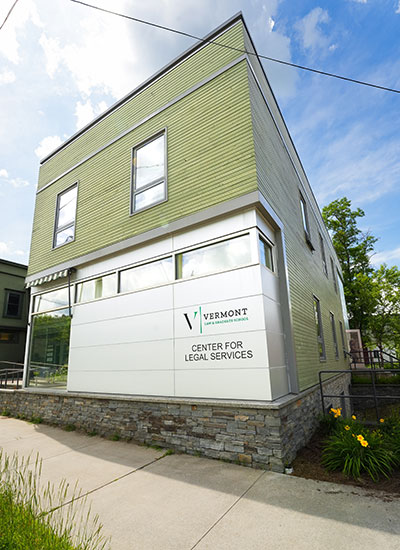
The SRLC’s extensive partner network, including a medical-legal partnership with the VA Medical Center in White River Junction, Vermont, and referral relationships with Vermont legal service providers, ensures students are serving Vermonters across the state.
Center for Justice Reform Clinic
Students in the Center for Justice Reform Clinic (CJRC) supported a steady docket of immigration cases, prevailing on a number of habeas actions in Vermont and New Hampshire federal district courts, as well as in bond proceedings before the Executive Office for Immigration Review, on behalf of clients from Uganda, Brazil, and Somalia. In collaboration with supervising attorneys, students fought to keep their clients out of detention and home with their families and in the community.
In addition to securing high-profile releases—including U.S. District Court Judge Geoffrey Crawford’s order freeing CJRC client Hussien Noor Hussien after finding due process violations stemming from his arrest—student clinicians also won the release of CJRC client Pastor Steven Tendo after 16 days in ICE custody, when Judge Joseph Laplante of the U.S. District Court of New Hampshire found that ICE’s arrest had violated Pastor Tendo’s due process rights.
Students likewise persuaded Judge William J. Sessions of the U.S. District Court for Vermont that ICE was unlawfully detaining a Brazilian human trafficking survivor without bond; shortly after the court’s order, that client was granted release on bond by the Boston Immigration Court.
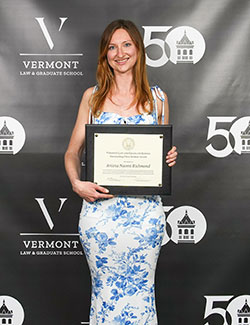
VLGS clinical faculty chose CJRC Advanced Clinician Ariana Richmond JD’26 as this year’s Clinical Legal Education Association Outstanding Clinical Student Award winner for her work assisting in the removal defense of a detained non-citizen and appearing on the record in his removal proceedings. Ariana performed extensive legal research, prepared multiple motions for review by both the federal district court of Vermont and the immigration court, worked closely with her client and his whole family to prepare and file supporting evidence, and successfully argued a motion in immigration court that bought the client critical time to continue building his case with the clinic.
Professor Brett Stokes said: “Ariana was a fierce and dependable advocate for her clients. She was a leader in the classroom and the first stop for many peers when they had a question or issue. She took responsibility for every aspect of her cases, no matter how complex or administrative. She truly embodies the values and mission of our clinical programs at VLGS.”
Small Business Law Clinic
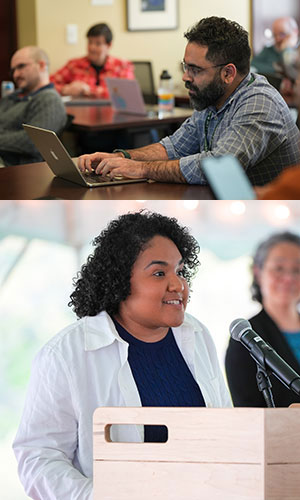
Small businesses across the state received legal education from students in the Small Business Law Clinic (SBLC). Two graduating students of note—John Stockham JD’26 and Christina Williams JD’26—spent both semesters of their 3L year in the SBLC, offering their expertise, humor, and wisdom to incoming clinic students.
John presented at the New England Clinical Conference and contributed to educational events for VC-funded energy and forest-product startups developing a business case for deploying in Vermont. Christina presented at Legal Service Corporation’s Innovations in Technology Conference and educated members of the Dartmouth College community on questions around marketing innovations and new technology. Together, they helped over four dozen small businesses and nonprofits understand the law, giving those entities solid footing for their future development and stability.
Environmental Advocacy Clinic
VLGS’s environmental clinics engaged in a broad range of matters and projects, supporting communities near and far. The Environmental Advocacy Clinic (EAC) secured big wins, including an early victory in a lawsuit over the management of Vermont state lands. Representing the forest protection organization Standing Trees, students helped ensure that Standing Trees’ central claims, that the Vermont Agency of Natural Resources is falling short in protecting Vermont waters and meeting its rulemaking obligations for its management plans for state forests, would move forward in court. Also for Standing Trees, students filed major briefs in federal court in New Hampshire and in the First Circuit to challenge logging projects in the White Mountains.
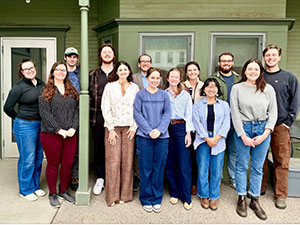
Additionally, before the semester’s end, the EAC filed a comment on behalf of longtime client Local Environmental Action Demanded (L.E.A.D.) Agency, Inc., an Oklahoma-based environmental justice organization, urging the Federal Energy Regulatory Commission to hold the Grand River Dam Authority accountable for the toxic impacts of flooding upstream from its Pensacola Dam facility in northeast Oklahoma.
Energy Clinic
Meanwhile, the Energy Clinic advanced a diverse portfolio of projects spanning community energy, clean transportation, and policy advocacy. The clinic launched a thermal energy network feasibility study for the Village of South Royalton and completed a community-owned solar array for the Pine Gate resident-owned community in New Hampshire.
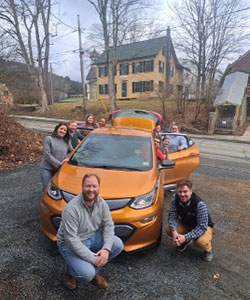
Students engaged in impactful policy work by filing comments on Puerto Rico’s community solar program and providing testimony before the Vermont Legislature, underscoring the clinic’s influence at both local and national levels. And, as a boon for the entire VLGS community, the clinic also expanded its clean transportation work by accepting a donated Chevy Bolt (reducing our own carbon footprint) and securing multiple commitments for EV charger installations.
Food and Agriculture Clinic
Students in the Food and Agriculture Clinic (FAC) engaged in projects spanning the food chain. Student clinicians Danielle Herrick JD’27 and Spencer Billings JD’27 worked directly with client organizations on agriculture-related matters concerning local regulation of polluting industries and conservation easements.
At the other end, the research conducted by second year law student Jack Peebles JD’27 into First Amendment claims related to food service in carceral settings supported the report Private Food, Public Harm: Privatized Food Service in Prisons and Jails, published by Center for Science in the Public Interest and Carceral Nutrition Project.
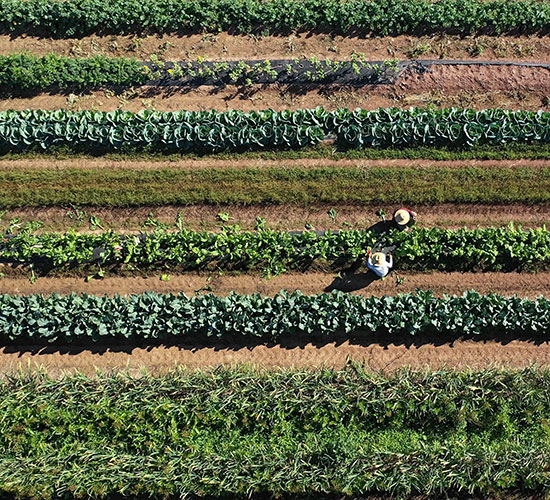
Finally, Chrystal Aquino JD’27 ventured out of Vermont and connected directly with practitioners in the field as part of her work on the Center for Agriculture and Food Systems’ (CAFS) Urban Agriculture and Innovative Production Policy Project.
Environmental Justice Clinic
The Environmental Justice Clinic (EJC) advanced its mission by supporting partners on the front lines of racial and economic justice in environmental matters—while navigating a rapidly shifting landscape of challenges. Student clinicians made meaningful contributions across multiple regions and across international borders.
This year marked the clinic’s first international environmental justice case. Students examined the human rights impacts of the nuclear legacy in the Republic of the Marshall Islands, contributing research and advocacy to support affected communities. In another milestone, online Master of Arts in Restorative Justice students joined EJC clinicians to submit comments to the United Nations Office of the High Commissioner for Human Rights (OHCHR) on the public health, environmental, and broader human rights challenges facing the Marshallese people.

These submissions were later published on the OHCHR website and will inform an upcoming U.N. report. As part of this work, one student traveled to the Marshall Islands during the spring semester to deepen the clinic’s engagement.
Closer to home, student clinicians launched a new collaboration with the Energy Clinic and Brown University to support community activists in Alabama and Mississippi confronting industrial pollution. Their work aims to help local advocates push for stronger, rights‑respecting actions from industry actors.
Students also continued long‑standing partnerships, including:
- Uniontown, Alabama: Supporting activists challenging pollution from one of the largest landfills in the United States.
- Northeast Oklahoma (Tar Creek Watershed): Assisting community members responding to inadequate government action on multiple health threats linked to various industrial sitings and contamination from them.
- Indian Point, New York: Contributing creative legal and advocacy strategies to efforts opposing the recommissioning of nuclear reactors just 24 miles north of New York City. New partnerships with Bennington and Williams Colleges were created to support this work.
- Vermont: Helping draft a model ordinance for townships along the Ottauquechee River to advance rights‑of‑nature principles and strengthen community tools to protect the river.
Across all these projects, EJC students demonstrated the power of community‑centered advocacy and the essential role of legal education in advancing environmental justice.
VLGS’s clinical programs are looking forward to the year ahead and reinvigorating two clinics that were on pause this past academic year: the Transnational Environmental Law Clinic and the Farmed Animal Advocacy Clinic (FAAC). Leading the FAAC will be Professor Conley Wouters, who brings to the role many years of litigation and teaching experience, along with a deep commitment to advancing the field of animal law. We also welcome Professor Kevin Cassidy to the EAC and look forward to benefiting from the expertise he’s built over years of environmental litigation and clinical teaching.